


{{serverconnectlatestnews.data.showlatestnews.data[0].news_title}}
{{serverconnectlatestnews.data.showlatestnews.data[0].news_date.formatDate("d MMM yyyy")}}
{{serverconnectlatestnews.data.showlatestnews.data[0].news_teaser}}

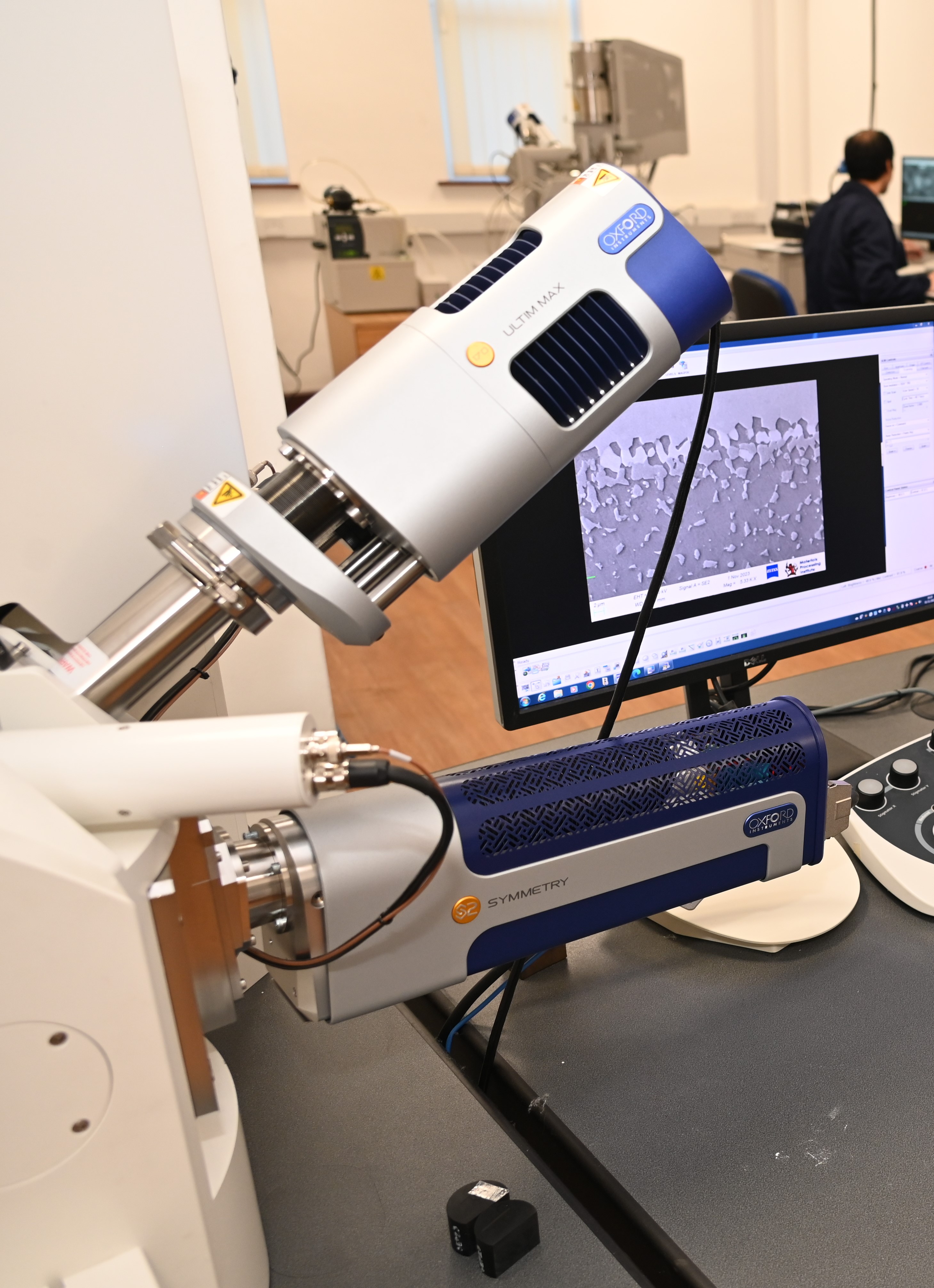
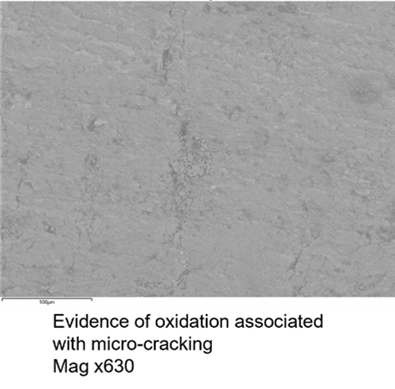
We carry out metallurgical investigations in our Advanced Materials Characterisation Centre using a range of analytical equipment. This includes optical microscopes, providing magnification of up to x1000, and our Scanning Electron Microscopy (SEM), providing high resolution images up to x100000.
A dummy bar assembly is a machine used in industrial applications that transfers pulling force to a continuously cast material.
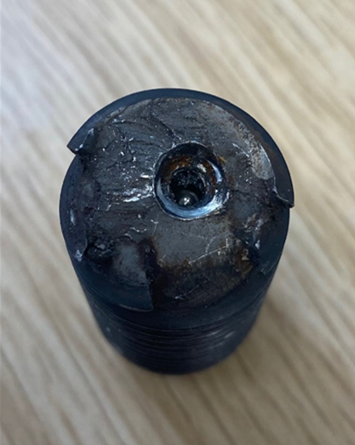
The client requested analysis of a bolt that had failed in the dummy bar assembly. They needed to establish if it was an isolated issue, or whether other bolts would be susceptible to failure.
Continuous bolt failure would be a significant issue for the client as it would impact on their production of cast product.
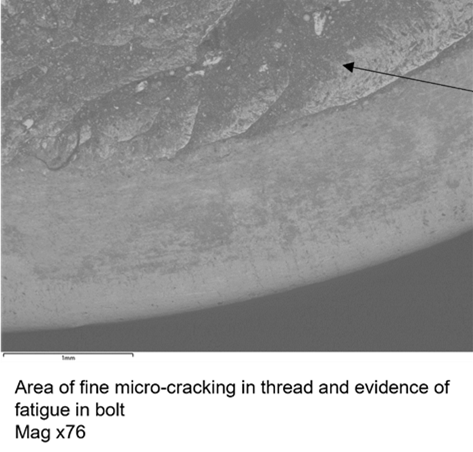
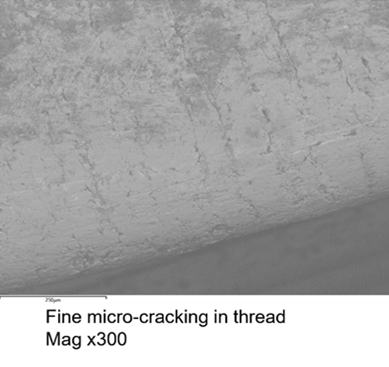
Following a visual examination the bolt was examined under our SEM which is equipped with Energy Dispersive Spectroscopy, which allows chemical analysis of non-metallic particles.
This assessment indicated that the bolt failed due to fatigue which had caused a crack to propagate through the bolt leading to a sudden, brittle final failure.
It was recommended that the pre-loading and tightening conditions for the bolts were reviewed.
Enquire about services, facilities, and expertise.
Materials Processing Institute is registered in England with registered No. 08919614
Registered Office: Materials Processing Institute, Eston Road, Middlesbrough TS6 6US
© Copyright Materials Processing Institute
Terms & Conditions / Terms & Conditions of Metal Sales / Website Terms & Conditions / Privacy Policy / Cookies Policy / Data Protection Notice / Site Map
Website by VIA Creative